If you've ever tried to hire someone to handle your phones, your Google reviews, and your social media, you already know the problem. It's not finding someone. It's finding someone who stays.
Restaurant turnover right now is brutal. Industry data puts the average annual turnover rate above 70%, and in some segments it climbs past 100%, meaning the average position turns over more than once a year. Front of house roles like hosts and servers turn over around 41% annually. More than half of restaurant operators say staffing is one of their top challenges, and over a third say training staff is right behind it.
Now think about the specific role a lot of owners try to have: someone who answers the phone, follows up with guests, watches the Google Business Profile, and responds to reviews every morning before service starts. Some owners call it a host role with extra duties. Some call it a guest engagement specialist or guest experience manager. Whatever the title, it's a real job, and it's one of the hardest to hire well, because it requires someone who can represent your brand in writing and on the phone exactly the way you would.
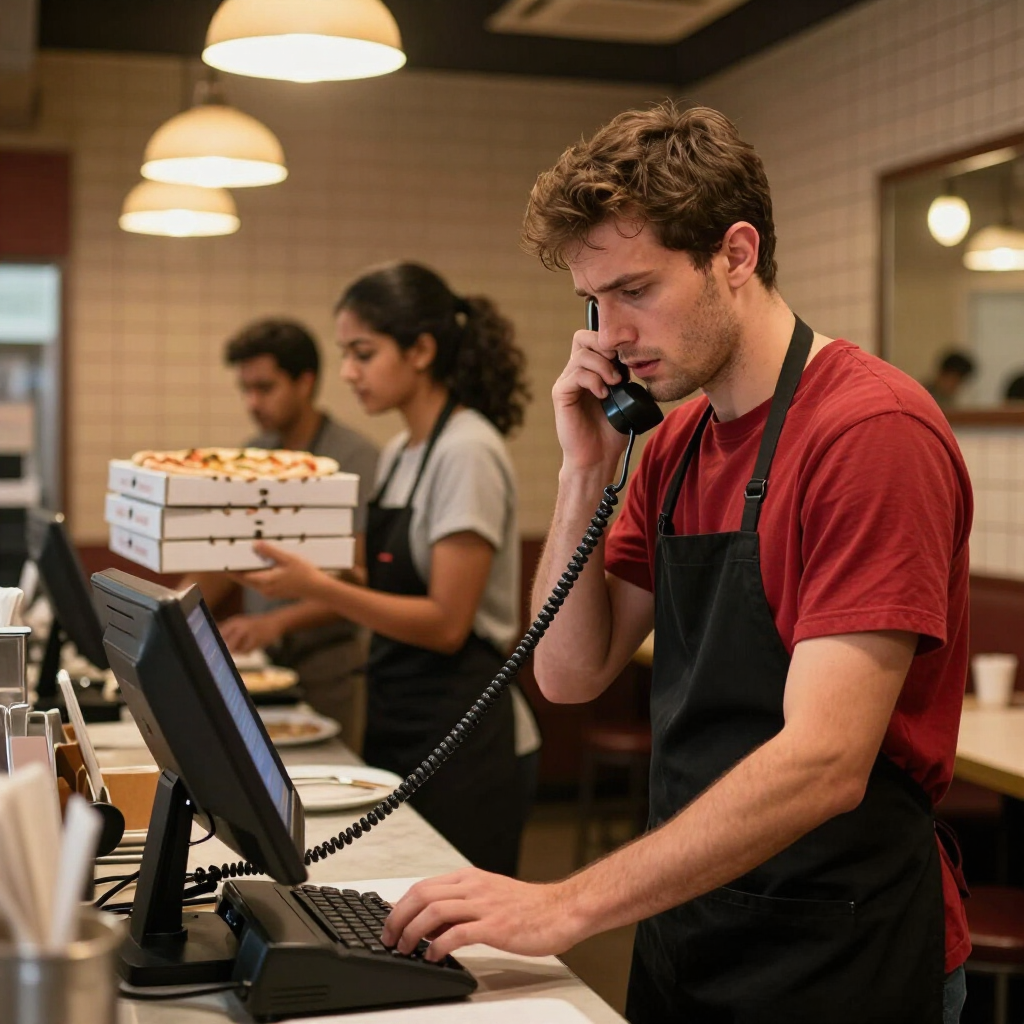
This looks a little different at a quick service restaurant, but the problem is the same. There's rarely one dedicated person for guest communications, it's usually whatever shift lead or manager is on the clock squeezing in a callback about a catering order, replying to a one star review about a wrong order, or trying to keep the store's social media looking active between rushes. QSR turnover is actually worse than full service, with some quick service positions turning over more than once a year, so even when an owner does manage to train someone on this, the odds they're still around in six months are lower, not higher. For a QSR, missed calls usually mean missed catering and group orders, the highest ticket transactions a counter service restaurant sees, and a slow or missing response to a bad review can quietly cost walk-in traffic, since a lot of quick service decisions come down to a fast glance at star ratings before someone picks where to grab lunch.
The investment you make before they ever do the job right
Training someone to do this well isn't quick. It's not just "here's the POS, here's the menu." You're teaching them your voice. How you want a frustrated guest handled. What tone is okay in a review response and what isn't. When to comp something and when to hold the line. That takes weeks, sometimes months, of correcting and re-explaining before it actually sticks.
The numbers back up what that costs. Replacing a single hourly employee runs an estimated $2,300 to $7,000 once you count recruiting, onboarding, and training time, with formal training alone averaging over $800 per hire. Replace a manager-level role and that number can climb past $10,000 to $15,000. And that's just to get back to where you already were.
Here's the part that actually hurts: by the time that person is good at the job, fully trained on your standards and trusted to represent you, they're also the person most likely to leave.
Nearly a third of restaurant workers say they plan to leave the industry within two years.
Almost half who leave say it came down to their relationship with management, not just the paycheck. So you do the hardest part of the work, the training, the trust-building, the correcting, and then you're often starting over right when it finally pays off.
The owners who don't have this problem usually have one thing in common
The restaurants that never seem to struggle with this almost always have the same setup: one person who's been doing guest communications and reputation for years, who isn't going anywhere, and who the owner never has to second-guess. Sometimes it's a spouse.
Sometimes it's a longtime employee who's basically part of the family at this point. Either way, the owner doesn't think about it because it's handled, consistently, every single day, by someone who already knows exactly how they want things done.
That consistency is worth more than people give it credit for. It's not really about the task list. It's about never having that nagging feeling that something is falling through the cracks while you're focused on the floor or the kitchen.
Where Miseify Comes In
This is the gap Miseify exists to close. Not by replacing your team, but by being the steady hand on guest communications and reputation that a lot of owners wish they already had in-house. Calls get followed up on. Reviews get responded to. Past guests get a reason to come back. And it doesn't go anywhere in six months because someone got a better offer across town.
The easiest way to think about it is the same way a lot of small businesses now think about a fractional CMO or a fractional CFO: someone you bring in to handle a specific part of the business at a senior level, without the cost or risk of putting them on payroll full time. That's what this is for guest communications and reputation. You get the consistency of having someone dedicated to it, without ever having to hire, train, or replace them yourself.
The honest comparison isn't Miseify versus a free employee, because that role was never going to be free. It's Miseify versus the real cost of hiring, training, and eventually replacing someone for this exact job, more than once, probably more than twice, over a few years. When you put it that way, the math usually isn't close.
And there's a second benefit that doesn't show up in any spreadsheet: the money and the mental space you get back. Instead of sinking another round of training hours into a guest communications hire, you can put that energy into your floor staff and kitchen, roles where industry experience already does most of the training for you. Someone who's run a floor before doesn't need you to teach them what a wine list is. They just need to learn your menu.
You shouldn't have to choose between a restaurant that runs well and a restaurant where you're not the one carrying every guest conversation on your own shoulders. That's the whole point.






 Ask Claude About Miseify