You've seen it happen. A guest mentions they almost went to the chain down the street because
that's what Google showed them first. You've been open for years. You have a great menu, loyal regulars, and a team that actually cares — but somehow, a corporate franchise with a thousand locations is beating you on the street you operate on.
The frustrating part? Most restaurant owners assume the answer is spending more on ads. It isn't. And the data proves it.
Google Has Two Lanes — and Most Restaurants Are Invisible in Both
When someone types "restaurants near me" or "best brunch in [your city]" into Google, two things appear:
paid ads (the sponsored listings big brands pay for) and the
Google Local 3-Pack — that map section with three businesses featured front and center.
Here's what almost no one talks about:
you cannot buy your way into the organic 3-Pack. Those three spots are earned through Google's algorithm, not purchased.
Google is explicit about this
— there is no way to pay for a better local ranking in organic results.
That's actually great news for independent restaurants. Because the 3-Pack is the most valuable real estate on all of Google, and it's available to anyone willing to work for it.
How valuable? Research from SOCi found that
businesses ranking in the top three local results earn 126% more traffic and 93% more conversion actions — calls, clicks, direction requests — than businesses ranked just below them. And the Local 3-Pack captures
40–50% of all clicks
for local searches. Meanwhile, paid ads?
Only about 15% of searchers click them.
Read that again: the free organic listing gets three times the clicks of the paid ad.
So What Actually Gets You Into the 3-Pack?
Google ranks local businesses using three core signals:
relevance (does your profile match what someone searched for),
distance (how close you are to the searcher), and
prominence (how well-known and active your business appears to be online).
You can't change your address. Relevance gets you in the game. But
prominence is where you win or lose — and it's almost entirely driven by your activity on your Google Business Profile.
Google is looking for signs that your business is alive, engaged, and worth recommending. An inactive profile — no new reviews, no responses, no posts, no fresh photos — signals the opposite. An active one signals that you're open, you care, and customers trust you.
The Activity That Actually Moves the Needle
Reviews — Volume, Recency, and What You Do With Them
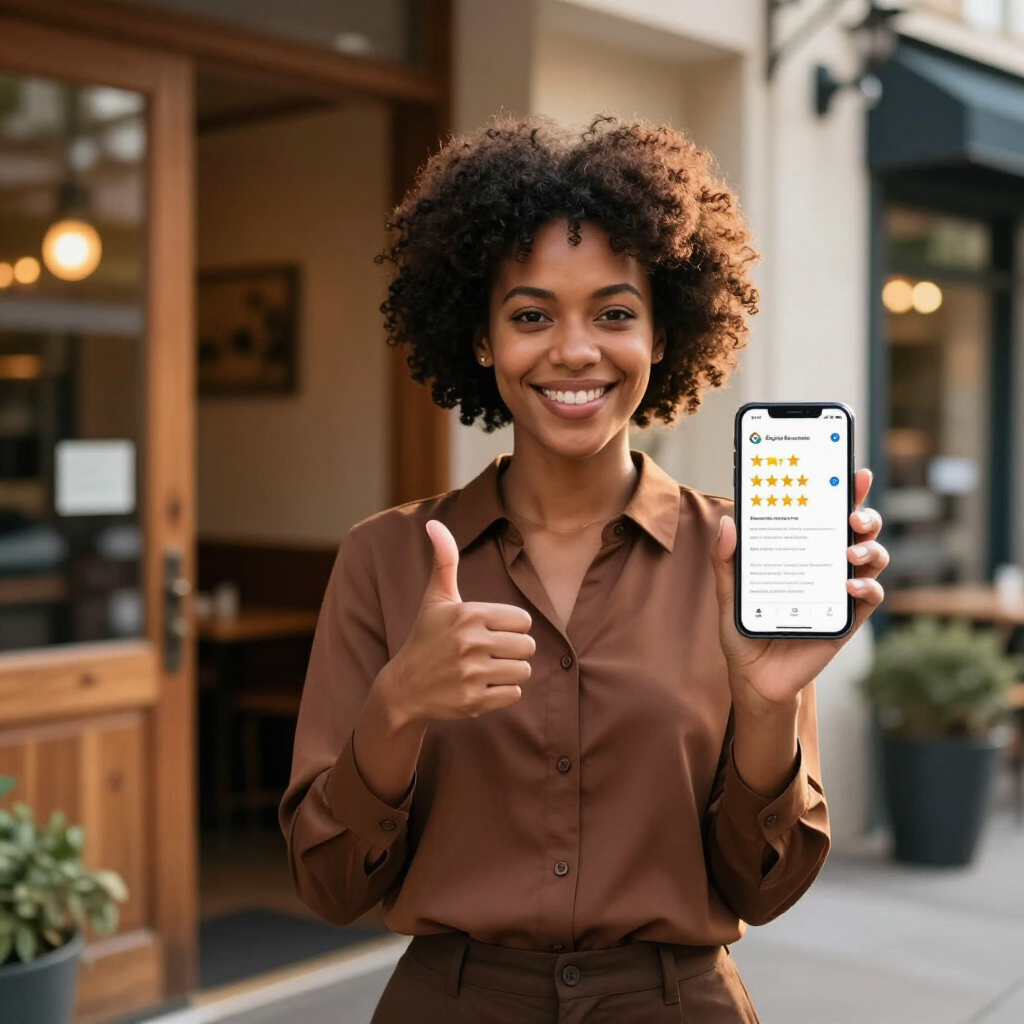
88% of consumers read Google reviews before deciding where to eat. But reviews don't just influence customers — they directly influence your ranking.
Research shows that
one additional review can generate over 600 search impressions, 80+ website visits, 63 direction requests, and 16 phone calls.
And
businesses with consistent review velocity — at least one new review per week — rank 25% higher in local results than those with stagnant profiles.
Critically, recency matters as much as volume.
73% of consumers only trust reviews written in the last 30 days. A restaurant with 200 old reviews and no new ones is losing ground to a competitor with 40 recent ones.
Harvard Business School research has found that
a one-star improvement in a restaurant's rating correlates with a 5–9% increase in revenue. That's not a marketing estimate. That's peer-reviewed economics.
Responding to Reviews — The Most Overlooked Ranking Signal
This is where most restaurant owners leave real money on the table. Responding to reviews isn't just good customer service — it's a ranking signal Google actively rewards.
Every response you write adds fresh, keyword-rich content to your profile. It tells Google your business is actively managed.
Responding to all reviews improves conversion rates by 16.4%.
Responding to just 25% of them improves conversions by 4.1%. And
negative reviews responded to within 24 hours are 33% more likely to be updated positively by the customer.
As local SEO expert Mike Blumenthal puts it: "Google's algorithm looks for signs of an active, engaged business. Review responses are one of the clearest indicators that someone is actively managing the business." (Local Biz Guys)
A case study from GMBMantra documented
a restaurant that moved from position #8 to #2 in the local pack within three months
— not by rebuilding their website, not by running ads — but solely by building a consistent review and response strategy. Their menu didn't change. Their building didn't move. Their activity did.
Photos — More Than Just Looking Good
Businesses with photos on their Google profile receive 42% more direction requests and 35% more website clicks
than those without. And it's not a one-time upload situation — Google rewards freshness. Consistently adding new photos keeps your profile active in the algorithm's eyes and gives customers a current, honest look at your space and food.
The average verified Google Business Profile has
fewer than one photo. That's an enormous opportunity hiding in plain sight.
The Part Big Chains Can't Buy
Here's the competitive reality most restaurant owners don't fully appreciate:
national chains are actually disadvantaged in local search.
Google's local algorithm prioritizes relevance, proximity, and genuine community engagement. A corporate franchise optimized for national visibility cannot compete with a local restaurant that has deep, authentic, recent customer activity in its specific neighborhood.
As one analysis of 120,000 local searches found, local businesses have the structural advantage in local pack results — because that's exactly what the algorithm was built for.
Big brands can buy the ad slots above the 3-Pack. They cannot buy the 3-Pack itself. That's your lane.
The Real Problem: Who Has Time for This?
Everything described above is doable. None of it is complicated. But here's the honest reality of running a restaurant: you're managing a kitchen, a floor, a staff, a POS system, vendor relationships, and probably a hundred things that broke this week.
Responding to every review within 24 hours. Posting updates regularly. Uploading fresh photos. Monitoring what's being said about you. Keeping your profile accurate and active. These things move the needle — but they require consistency, and consistency requires time that most restaurant owners simply don't have.
That's exactly the gap Miseify was built to close. We handle the ongoing work that keeps your Google presence active, engaged, and algorithm-friendly — so you can focus on running your restaurant while your visibility quietly improves in the background.
The research is clear: an active Google presence is one of the highest-return investments a local restaurant can make. It doesn't require a national ad budget. It requires showing up, consistently, in the places your customers are already looking.
Want to see what your Google profile looks like through the algorithm's eyes?
Book a free review with Miseify and we'll walk you through exactly where you stand and what's worth focusing on first.




 Ask Claude About Miseify